
CAN Principles and Practice
From design to the field.
Learn how the bus works, how to measure it and how to track down the fault, from two wires and a terminator to a CANopen drive that won’t enable. One online CAN bus course with short interactive lessons and simulator labs you can break on purpose.
Start free: a free account opens two full lessons, with their labs. Start the free lesson · Take the free 5-minute CAN quiz
After this course, you will:
- Measure a CAN bus with a multimeter and an oscilloscope and say whether its wiring, termination and grounding are healthy
- Read an analyzer trace: frames, error frames, bus load and which nodes are present
- Explain why one node drops off the bus, and find the physical or configuration cause
- Investigate a fault on an SAE J1939® machine: who is talking, address claims, parameter groups and diagnostic messages
- Bring up and troubleshoot a CANopen network: NMT states, SDO and PDO, heartbeat and LSS
- Follow the same troubleshooting sequence on every job, from the complaint to the verified fix
What this CAN bus course covers
From what CAN is to troubleshooting CANopen and J1939 networks. Each lesson is marked Beginner, Intermediate or Advanced, so you can pace yourself.
Module 1: CAN Foundations
What CAN is, why it won, how the bus is built, how messages are named and prioritized, and how gateways join networks.
Module 2: Physical Layer & Tools
Cable, connectors, termination, grounding and safe access, with the multimeter three-test method, the oscilloscope and harness diagrams.
Module 3: Frames & Protocol
Every field of a classic frame, arbitration, bit timing and sample point, and the five error types, plus a short introduction to CAN FD.
Module 4: Troubleshooting
A fixed troubleshooting flow, fault types, intermittent faults, analyzers, harsh environments (water, dust, vibration, corrosion), gateway faults, common myths and worked cases.
Module 5: CANopen
The object dictionary, NMT, SDO, PDO, LSS, drives (CiA 402) and a CANopen troubleshooting order.
Module 6: J1939
Lessons on the SAE J1939® protocol in our own words: identifiers, parameter groups, address claim, requests and transport, faults, service tools and a first-pass troubleshooting routine with worked cases.
How you’ll learn
- Read or listen. Short lessons, each tied to a visual you can play with.
- Labs you can break. Pull a terminator, short a line, crash a node into bus-off, then fix it. A graded diagnosis lab has you find faults on a simulated machine.
- CAN Advisor. Highlight a sentence and ask for an explanation, or ask about anything in the course.
- Skills checks and practice problems. See where you start, where you’re weak, and how far you’ve come.
- Certificate of Completion signed by Igor Ramos, with a credential ID anyone can verify online.
Separately from the course, the free tools on this site are open to everyone: the J1939 PGN decoder, the CAN simulator and the bus load calculator.
This course is for you if:
- Field service and maintenance technicians who want to measure before they swap parts
- Engineers who design, integrate or support CAN networks on machines
- Training managers who need a team diagnosing the same way
- Anyone working on heavy equipment, agriculture, trucks, industrial automation or mining
Your Instructor
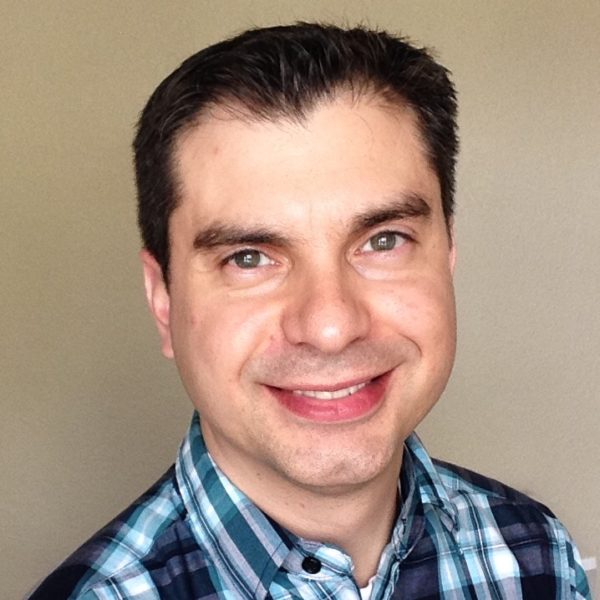
Igor Ramos, founder of CANbus Academy, brings over 10 years of experience in New Product Introduction, including serving as Technical Leader for Caterpillar’s Asphalt Paver product line. With diverse design roles in software architecture and R&D for hybrid excavators, Igor offers both office and shop-floor expertise. He holds a Management degree from Missouri University and a Bachelor’s in Electrical Engineering from the University of Illinois, and is a Certified Six Sigma Black Belt.
Understand CAN. Then fix it.
A free account opens two full lessons. Try them before you decide.
Get full accessFrequently Asked Questions
How is the course delivered?
Online and self-paced, with one year of access. The course is text-first for now: some lessons and recently edited sections have no narration yet and are read as text, and some older videos and slides show an on-screen note where a fact has been corrected.
Do I need any equipment?
No. The labs and the graded diagnosis lab run on simulated networks in your browser. They test how you measure and reason, not work on a real machine. A multimeter helps you practice on your own equipment, but the course doesn’t require one.
What do I need to know before I start?
Be comfortable with a digital multimeter (volts, ohms and continuity) and basic ideas such as series and parallel resistance. Short refreshers are included. No programming and no prior CAN knowledge needed.
Does it cover J1939, CAN FD or other protocols?
Yes for J1939 and CANopen, which each have their own module. Example machines and messages in the J1939 module are illustrative, written for the course; SAE tables are not reproduced. CAN FD is covered by one introductory lesson. MilCAN and NMEA 2000 are not covered.
How is this different from CAN Bus Fundamentals and CAN Bus Troubleshooting?
Those are our earlier courses, CAN Bus Fundamentals and CAN Bus Troubleshooting. They are no longer sold on their own. CAN Principles and Practice covers both subject areas in one place and adds simulator labs, a graded diagnosis lab, and modules on CANopen and J1939.
Can I buy seats for my team?
Yes. A team pack for 3 learners is $3,997, and each additional learner is $1,197, paid by card. Each learner gets their own login and a year of access. Companies paying by invoice or purchase order can request a quote.
What is the refund policy?
Refund requests are considered case by case when made within 14 days of purchase. A refund is not guaranteed, and this does not affect any rights you have under applicable law. See the course terms.
What does the certificate mean?
The Certificate of Completion records that you finished the course and passed its final skills check, with a credential ID anyone can verify online. It is not an accredited certification or an assessment on a real machine.
SAE® and J1939® are registered trademarks of SAE International, Inc. CANbus Academy is not affiliated with, endorsed by, or sponsored by SAE International. This course does not reproduce SAE standards or the J1939 Digital Annex; obtain the official documents from SAE.