
CAN Bus Training & Engineering Tools
Courses, tools, and consulting for engineers working with CAN, CAN FD, and J1939.
Founded by an ex-Caterpillar engineer with 8 patents in vehicle network systems. Used by engineering teams at General Dynamics, Mercedes-Benz, and John Deere.






CAN Bus Diagnostic Tools
Professional-grade tools that run in your browser. No downloads, no license keys.
J1939 PGN Decoder
- Decode PGNs from 29-bit CAN IDs
- Decode SPNs with scaling & units from your own DBC
- Batch decode from log files
Bus Load Calculator
- Calculate utilization & worst-case latency
- Standard (11-bit) and extended (29-bit) frames
- Network health scoring
Troubleshooting Guide
- Multimeter tests for termination resistance
- CAN_H / CAN_L voltage level reference
- Transceiver fault isolation steps
Free tier on all tools. Pro unlocks the full feature set →
CAN Bus Courses
Self-paced online training. Enroll and get instant access.
CAN Troubleshooting
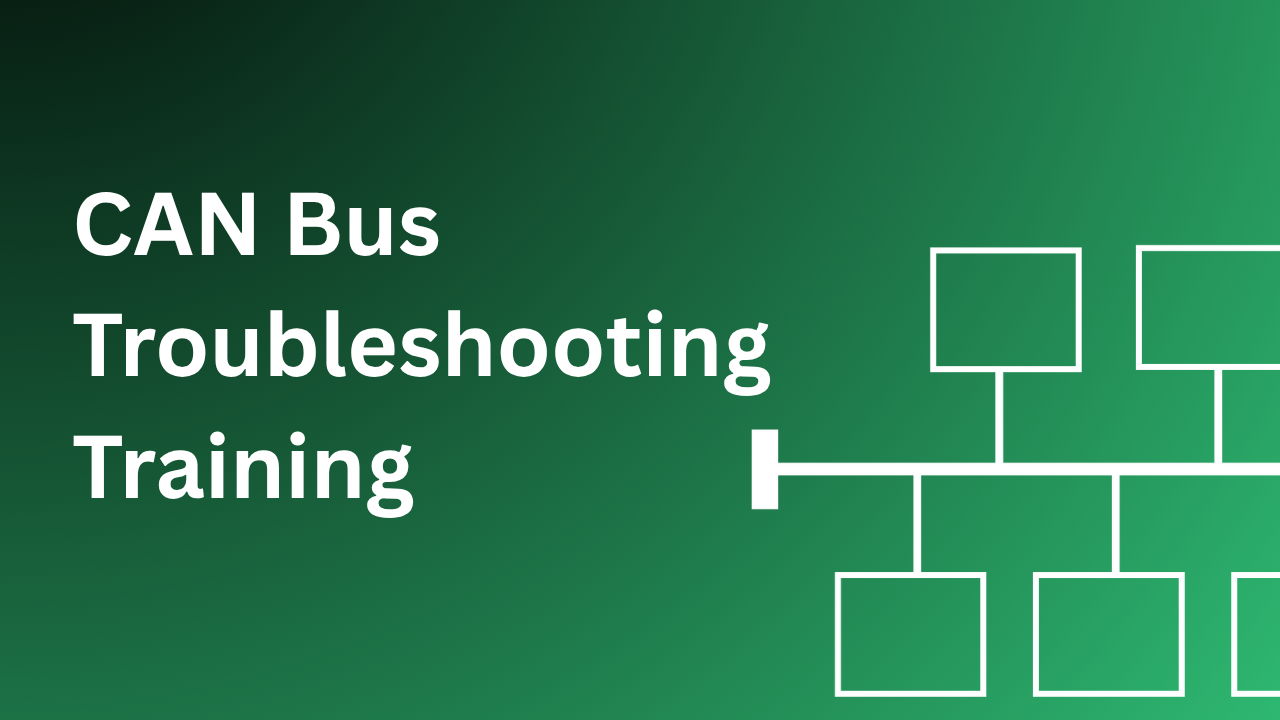
- Physical-layer diagnostics
- Multimeter & oscilloscope techniques
- Fault isolation methodology
CAN Fundamentals
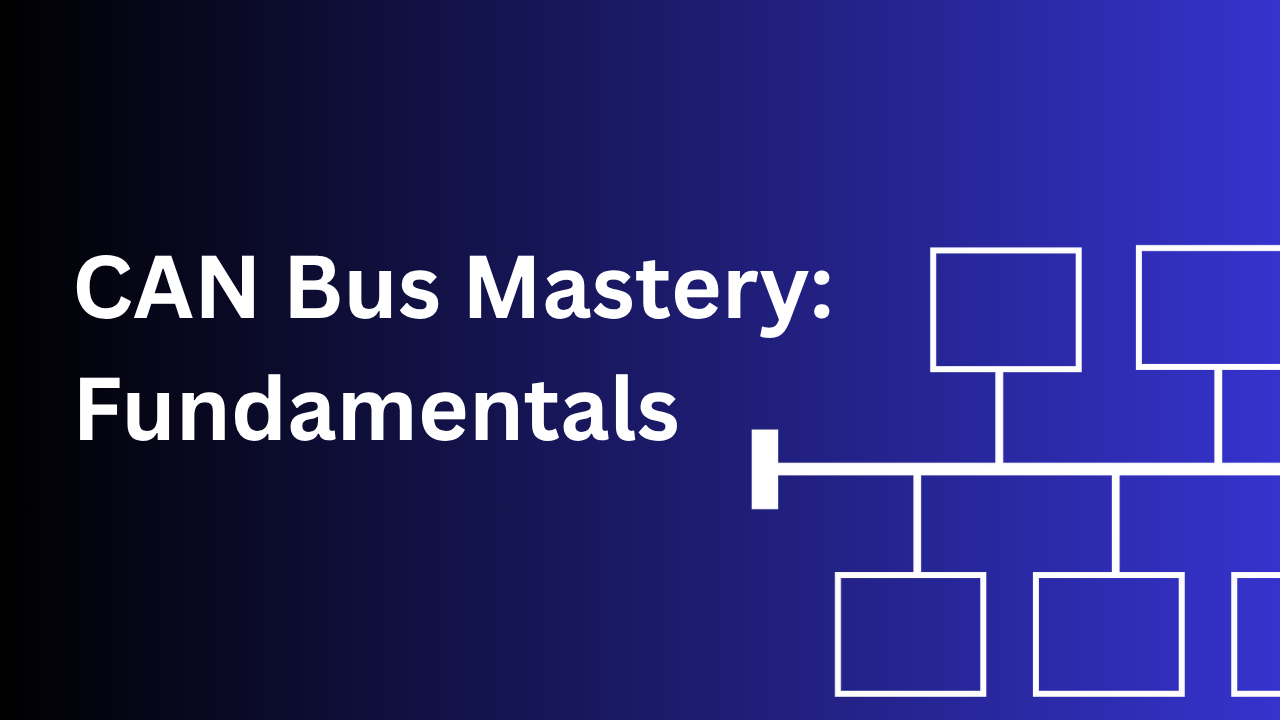
- Protocol architecture & frame formats
- Arbitration, error handling, bus timing
- The foundation for everything else
CAN Custom Training
- On-site or virtual workshops
- Tailored to your team’s systems
- CAN, J1939, CAN FD coverage
Results from Real Engineers
“I diagnosed an intermittent CAN fault in 20 minutes that had stumped our shop for two weeks. The systematic approach in Module 3 paid for the course ten times over.”
Senior Field Engineer
Heavy Equipment Dealer
“Before this course I was swapping ECUs hoping to fix the problem. Now I know exactly where to measure and what the readings should be. Completely changed how I work.”
Service Technician
Fleet Maintenance
“We enrolled our entire service team. Repair times on CAN-related issues dropped by about 40%. The ROI was immediate.”
Service Manager
OEM Dealer Network
Built by a CAN Bus Engineer
CANbus Academy was founded by Igor Ramos, who spent over a decade at Caterpillar designing CAN-based control systems for heavy equipment. He holds 8 patents in vehicle network architecture and has delivered CAN bus training to engineering teams at General Dynamics, Mercedes-Benz, John Deere, and dozens of OEMs across automotive, defense, and industrial automation.
Every course and every tool is built from that production-floor experience — not textbook theory.
Frequently Asked Questions
What is CAN bus?
CAN bus (Controller Area Network) is a communication protocol that lets electronic modules in a vehicle or machine talk to each other over a shared wiring harness. Instead of running a dedicated cable between every module, CAN uses a two-wire bus — CAN_H and CAN_L — so dozens of ECUs can exchange data on the same network. It was originally designed by Bosch for automotive systems and is now the standard in automotive, heavy equipment, marine, defense, aerospace, and industrial automation.
How does a CAN bus system work?
A CAN bus system connects multiple electronic control units (ECUs) on a two-wire network. Each ECU can send and receive messages without a central controller. Messages are prioritized by their identifier — lower IDs win arbitration and transmit first. The bus requires 120-ohm termination resistors at each end of the network. Standard CAN runs at up to 1 Mbit/s, while CAN FD supports higher data rates and larger payloads for modern applications.
What is J1939 and how does it relate to CAN bus?
SAE J1939 is an application-layer protocol built on top of CAN bus, used primarily in heavy-duty vehicles, trucks, and off-highway equipment. It defines standard Parameter Group Numbers (PGNs) and Suspect Parameter Numbers (SPNs) for engine data, transmission status, diagnostics, and more. J1939 uses 29-bit extended CAN identifiers and is the standard protocol in commercial vehicles, construction equipment, and agricultural machinery.
What CAN bus wiring and connectors are used?
CAN bus uses a twisted pair of wires — CAN_H (high) and CAN_L (low) — typically in a shielded cable. The bus must be terminated with 120-ohm resistors at each physical end. Common connectors include the OBD-II port (pin 6 = CAN_H, pin 14 = CAN_L) in automotive, Deutsch connectors in heavy equipment, and 9-pin D-sub (per CiA 303) in industrial CAN networks. Proper wiring and termination are the most common sources of CAN bus faults.
Do I need CAN bus training?
If you design, integrate, test, or troubleshoot systems that use CAN — whether automotive, heavy equipment, marine, or industrial — structured training saves weeks of trial-and-error. Our courses cover CAN protocol fundamentals, physical-layer diagnostics with multimeters and oscilloscopes, and J1939 application-layer analysis. Engineers typically recoup the course cost on their first real diagnostic job.